

Item specifics
-
Condition
-
-
Brand
-
Unbranded
-
MPN
-
Does not apply
-
ISBN
-
9780809144846
-
Publication Year
-
2007
-
Format
-
Trade Paperback
-
Language
-
English
-
Book Title
-
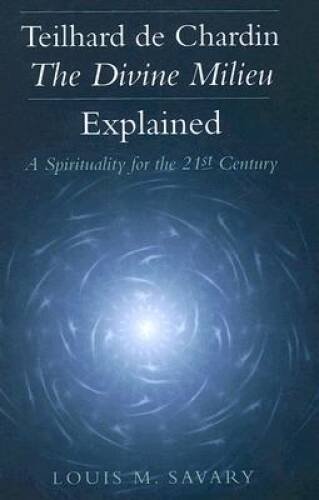
Teilhard De Chardin -The Divine Milieu Explained : a Spirituality for the 21st Century
-
Publisher
-
Paulist Press
-
Genre
-
Religion, Philosophy
-
Item Length
-
9 in
-
Topic
-
Spirituality, Religious, Philosophy
-
Item Weight
-
12.8 Oz
-
Item Width
-
6 in
-
Number of Pages
-
288 Pages
Teilhard de Chardin – The Divine Milieu Explained: A Spirituality fo – VERY GOOD
About this product
Product Identifiers
Publisher
Paulist Press
ISBN-10
0809144840
ISBN-13
9780809144846
eBay Product ID (ePID)
59382367
Product Key Features
Book Title
Teilhard De Chardin -The Divine Milieu Explained : a Spirituality for the 21st Century
Number of Pages
288 Pages
Language
English
Publication Year
2007
Topic
Spirituality, Religious, Philosophy
Genre
Religion, Philosophy
Format
Trade Paperback
Dimensions
Item Weight
12.8 Oz
Item Length
9 in
Item Width
6 in
Additional Product Features
Intended Audience
Trade
LCCN
2007-028632
Synopsis
During the 20th century, Jesuit priest Teilhard de Chardin developed a truly revolutionary spirituality based on the discoveries of science and a comprehensive evolutionary perspective–a perspective never conceived of before by traditional spiritual writers. Through his integration of science and faith, Teilhard offered us a new way to understand the Word of God. In Teilhard de Chardin–The Divine Milieu Explained, author Louis M. Savary sets forth a series of revolutionary spiritual practices that integrate science and faith, based on the evolutionary spirituality of Teilhard’s pathbreaking work, The Divine Milieu. As a result, this volume: * makes accessible to a wide audience the ideas of Teilhard’s spirituality * explains principles of Teilhard’s scientific thought not explicitly formulated in The Divine Milieu * shows that Teilhard’s theology and spirituality are fully compatible with classical Christian theology * suggests many simple reflections or spiritual practices to help put Teilhard’s spirituality directly into daily life Teilhard never spelled out for us how to practice this new understanding in our daily lives. And until we can practice it, this new transformative spirituality, remains simply a collection of revolutionary ideas about God that we can only talk about. Having taught and practiced Teilhardian ideas for almost forty years, author Louis M. Savary offers this work as a first step toward establishing new spiritual practices that translate Teilhard’s ideas into action. It shows how to both think about one’s faith and live it in light of evolutionary science. +, During the twentieth century, Jesuit priest-scientist Pierre Teilhaid de Chardin developed a truly innovative spirituality. By integrating both a comprehensive evolutionary perspective and the discoveries of science into Christian spirituality, Teilhard presented a new way to understand the Word of God and the immensity of the Universal Christ. While many books have explored and explained Teilhard’s theology, there has never been a spiritual guide for everyday use of his principles-until now. Savary transforms these challenging and difficult-to-understand concepts into a more accessible spirituality. The Divine Milieu Explained also offers a series of spiritual practices and exercises that integrate science and faith according to Teilhaid’s evolutionary spirituality. “His purpose….[was] to see spiritual reality today-in the world contemporary men and women live in. thoroughly informed and transformed by science and technology.” Book jacket., During the 20th century, Jesuit priest Teilhard de Chardin developed a truly revolutionary spirituality based on the discoveries of science and a comprehensive evolutionary perspective–a perspective never conceived of before by traditional spiritual writers. Through his integration of science and faith, Teilhard offered us a new way to understand the Word of God. In Teilhard de Chardin–The Divine Milieu Explained, author Louis M. Savary sets forth a series of revolutionary spiritual practices that integrate science and faith, based on the evolutionary spirituality of Teilhard’s pathbreaking work, The Divine Milieu. As a result, this volume: – makes accessible to a wide audience the ideas of Teilhard’s spirituality – explains principles of Teilhard’s scientific thought not explicitly formulated in The Divine Milieu – shows that Teilhard’s theology and spirituality are fully compatible with classical Christian theology – suggests many simple reflections or spiritual practices to help put Teilhard’s spirituality directly into daily life Teilhard never spelled out for us how to practice this new understanding in our daily lives. And until we can practice it, this new transformative spirituality, remains simply a collection of revolutionary ideas about God that we can only talk about. Having taught and practiced Teilhardian ideas for almost forty years, author Louis M. Savary offers this work as a first step toward establishing new spiritual practices that translate Teilhard’s ideas into action. It shows how to both think about one’s faith and live it in light of evolutionary science. +
LC Classification Number
BR100.S295 2007
Price : 5.32
Ends on : [readable_time][/readable_time]
View on eBay